


Global Demand Outlook for Executive Summary Shopping Cart Market Size and Share
CAGR Value
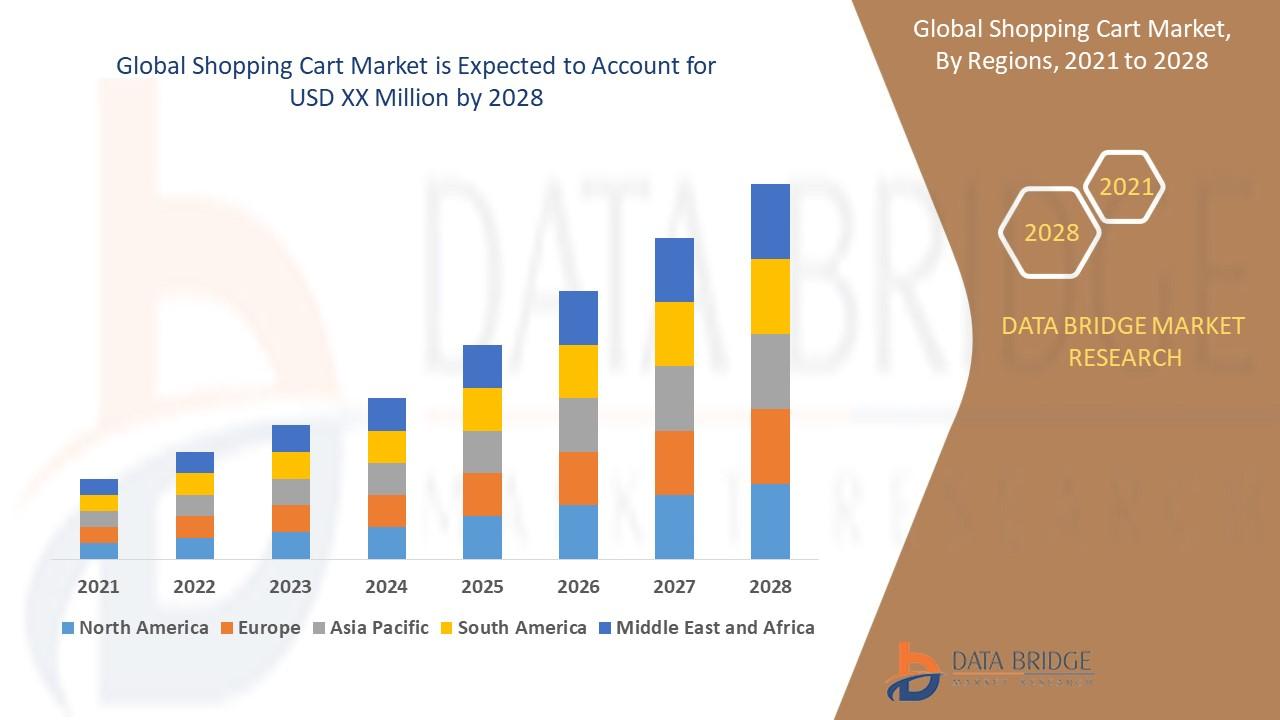
The shopping cart market size was valued at USD 796.06 million in 2024 and is projected to reach USD 5187.12 million by 2032, with a CAGR of 26.40% during the forecast period of 2025 to 2032.
This Shopping Cart Market report includes a wide-ranging evaluation of the market’s growth prospects and restrictions. The Shopping Cart Market report provides estimations about the growth rate and the market value in Shopping Cart Market industry based on market dynamics and growth inducing factors. Global Shopping Cart Market report studies the industry abilities for each geographical region based on the customer purchasing patterns, macroeconomic parameters, development rate, and market demand and supply states. In addition, this Shopping Cart Market report also endows with top to bottom estimation of the market with respect to income and developing business sector.
Shopping Cart Market report is an important source of guidance for companies and individuals offering industry chain structure, business strategies and proposals for new project investments. This Shopping Cart Market report has a chapter on the Global Shopping Cart Market and all its associated companies with their profiles, which provides valuable data related to their outlook in terms of finances, product portfolios, investment plans, and marketing and business strategies. The Shopping Cart Market report is worked upon with the best-practice models, comprehensive market analysis and research methodologies so that clients achieve perfect market segmentation and insights.
Get strategic knowledge, trends, and forecasts with our Shopping Cart Market report. Full report available for download:
https://www.databridgemarketresearch.com/reports/global-shopping-cart-market
Shopping Cart Market Exploration
Segments
- Based on type, the global shopping cart market can be segmented into traditional shopping carts, modern shopping carts, and smart shopping carts. The traditional shopping carts are the basic, manual carts typically found in grocery stores. Modern shopping carts may include features like bigger storage capacity, wheels for easy maneuverability, and child seat attachments. Smart shopping carts are equipped with advanced technologies such as RFID tags, barcode scanners, and touchscreens to enhance the shopping experience and streamline the checkout process.
- In terms of material, the market can be divided into metal shopping carts, plastic shopping carts, and hybrid shopping carts. Metal shopping carts are known for their durability and sturdiness, making them ideal for heavy-duty use. Plastic shopping carts are lightweight and corrosion-resistant, suitable for use in various retail settings. Hybrid shopping carts combine the benefits of both metal and plastic materials for a versatile shopping cart option.
- Considering the application, the global shopping cart market can be categorized into supermarkets & hypermarkets, convenience stores, department stores, and e-commerce platforms. Supermarkets and hypermarkets are the primary users of shopping carts, requiring a large fleet of carts to accommodate shoppers. Convenience stores may opt for smaller, more compact carts to cater to quick shopping trips. Department stores and e-commerce platforms might offer specialized carts tailored to their unique shopping environments.
Market Players
- Some of the key players in the global shopping cart market include The TAKSDI Group, National Cart Company, Versacart Systems, Inc., Cari-All Group, Unarco Material Handling, Inc., USM Retail, Creaciones Marsanz S.L., Sambo Corp., Technibilt Shopping Cart Company, Guangdong Winleader Metal Products Co., Ltd., and Wanzl Metallwarenfabrik GmbH. These market players are actively involved in product innovation, strategic collaborations, and expansion efforts to maintain a competitive edge in the market.
The global shopping cart market is witnessing steady growth due to the increasing consumer preference for convenient shopping experiences and the rising number of retail outlets worldwide. Technological advancements in shopping cart design and materials are further driving market growth. With a diverse range of shopping cart options available to cater to different retail environments, the market is expected to continue its expansion in the coming years.
The global shopping cart market is experiencing notable growth as consumer preferences and retail landscapes continue to evolve. One key trend shaping the market is the increasing emphasis on sustainability and eco-friendly solutions. As environmental concerns become more prominent, there is a growing demand for shopping carts made from recycled materials or designed for easy recycling at the end of their lifecycle. Market players are responding to this trend by incorporating sustainability features into their cart designs, such as using bio-based plastics or promoting reusable cart programs to reduce waste and promote environmental responsibility.
Moreover, the integration of technology in shopping carts is another significant trend driving market growth. Smart shopping carts equipped with IoT sensors, RFID technology, and touchscreens are revolutionizing the shopping experience by providing real-time product information, personalized recommendations, and seamless checkout processes. These innovative features not only enhance convenience for shoppers but also offer retailers valuable data insights for improving customer engagement and operational efficiency. As technology continues to advance, we can expect to see further enhancements in smart shopping cart capabilities, potentially including AI-driven shopping assistants and integration with mobile payment systems for a truly frictionless shopping experience.
Another key factor influencing the market is the shift towards omnichannel retailing, where physical stores seamlessly integrate with online platforms to offer a holistic shopping experience. This trend is driving the demand for versatile shopping carts that can accommodate both in-store and online purchases, such as click-and-collect orders or returns processed in-store. Retailers are increasingly investing in omnichannel strategies to meet evolving consumer expectations and stay competitive in a rapidly changing retail landscape. Shopping cart manufacturers are adapting to this trend by developing flexible cart designs that can support various fulfillment options and enhance the omnichannel shopping experience for both retailers and consumers.
Furthermore, the COVID-19 pandemic has had a profound impact on the shopping cart market, prompting increased focus on hygiene and safety measures in retail environments. Many retailers have implemented enhanced cleaning protocols, contactless checkout options, and social distancing measures to reassure customers and minimize the risk of virus transmission. In response to these challenges, shopping cart manufacturers are introducing antimicrobial coatings, hands-free features, and UV sterilization systems to provide shoppers with a safe and hygienic shopping experience. These innovations are expected to remain relevant even post-pandemic as consumer awareness of hygiene practices continues to shape retail expectations.
In conclusion, the global shopping cart market is poised for continued growth driven by evolving consumer preferences, technological advancements, sustainability initiatives, omnichannel strategies, and the ongoing focus on hygiene and safety. Market players that can innovate and adapt to these changing dynamics are well-positioned to succeed in this competitive landscape and capitalize on the opportunities presented by the shifting retail paradigm.The global shopping cart market is a dynamic landscape influenced by numerous factors driving growth and innovation in the industry. One significant trend shaping the market is the increasing focus on sustainability and eco-friendly solutions. As consumers become more environmentally conscious, there is a growing demand for shopping carts made from recycled materials or designed for easy recycling at the end of their lifecycle. Market players are responding to this trend by integrating sustainability features into their cart designs, such as using bio-based plastics or promoting reusable cart programs to reduce waste and promote environmental responsibility. This shift towards sustainability not only aligns with consumer preferences but also helps retailers enhance their corporate social responsibility efforts, creating a positive brand image in the eyes of environmentally conscious shoppers.
Furthermore, the integration of technology in shopping carts is revolutionizing the shopping experience and driving market growth. Smart shopping carts equipped with IoT sensors, RFID technology, and touchscreens are offering real-time product information, personalized recommendations, and seamless checkout processes. These advanced features not only enhance convenience for shoppers but also provide retailers with valuable data insights for improving customer engagement and operational efficiency. As technology continues to advance, we can expect to see further enhancements in smart shopping cart capabilities, potentially including AI-driven shopping assistants and integration with mobile payment systems, paving the way for a truly frictionless shopping experience that caters to the demands of modern consumers.
In addition to sustainability and technological advancements, the trend towards omnichannel retailing is reshaping the shopping cart market. With the seamless integration of physical stores and online platforms, there is a growing need for versatile shopping carts that can accommodate various fulfillment options such as click-and-collect orders or in-store returns of online purchases. Retailers are investing in omnichannel strategies to meet evolving consumer expectations and stay competitive in a rapidly changing retail landscape. Shopping cart manufacturers are adapting to this trend by developing flexible cart designs that support omnichannel experiences, providing a seamless shopping journey for consumers across different touchpoints. The shift towards omnichannel retailing presents opportunities for market players to offer innovative cart solutions that cater to the needs of retailers seeking to enhance their online and offline presence while providing a cohesive shopping experience for customers.
Moreover, the COVID-19 pandemic has underscored the importance of hygiene and safety measures in retail environments, further driving innovation in the shopping cart market. Retailers are implementing enhanced cleaning protocols, contactless checkout options, and social distancing measures to ensure a safe shopping experience for consumers. Shopping cart manufacturers are introducing antimicrobial coatings, hands-free features, and UV sterilization systems to address the heightened focus on hygiene and safety, both during the pandemic and beyond. These innovations are expected to remain relevant as consumer expectations around cleanliness and sanitization continue to influence retail practices in the post-pandemic era, emphasizing the importance of providing shoppers with a safe and hygienic shopping environment.
In conclusion, the global shopping cart market is evolving in response to changing consumer preferences, technological advancements, sustainability initiatives, omnichannel strategies, and the increased focus on hygiene and safety in retail environments. Market players that can adapt to these trends and innovate in their product offerings will be well-positioned to capitalize on the opportunities presented by these market dynamics and meet the evolving needs of retailers and consumers in a rapidly evolving retail landscape.
See how much of the market the company dominates
https://www.databridgemarketresearch.com/reports/global-shopping-cart-market/companies
Essential Analyst Questions for Shopping Cart Market Forecasting
- How much is the Shopping Cart Market worth globally?
- What is the expected CAGR for this Shopping Cart Market industry?
- What are the segmentation strategies used in the Shopping Cart Market report?
- Which firms are dominating at the global Shopping Cart Market level?
- What nation-level forecasts are available for Shopping Cart Market?
- What multinational corporations are Shopping Cart Market leading in sales?
Browse More Reports:
Global Kennedy's Disease Treatment Market
Global Halal Food Market
Global Voice and Speech Analytics Market
Global Woodhouse Sakati Syndrome Market
Middle East and Africa Clinical Trial Imaging Market
Global Baby Diaper Rash Cream Market
Global Wine Barrel Market
Asia-Pacific Thermoplastic Elastomers Market
Europe At-Home Testing Kits Market
Europe Cheese Based Snacks Market
Global Cashew Milk Market
Europe Prefilled Syringes Market
Global Amino Acids Market
Asia-Pacific Digital Therapeutic (DTx) Market
U.S. Smart Hospitality Market
About Data Bridge Market Research:
An absolute way to forecast what the future holds is to comprehend the trend today!
Data Bridge Market Research set forth itself as an unconventional and neoteric market research and consulting firm with an unparalleled level of resilience and integrated approaches. We are determined to unearth the best market opportunities and foster efficient information for your business to thrive in the market. Data Bridge endeavors to provide appropriate solutions to the complex business challenges and initiates an effortless decision-making process. Data Bridge is an aftermath of sheer wisdom and experience which was formulated and framed in the year 2015 in Pune.
Contact Us:
Data Bridge Market Research
US: +1 614 591 3140
UK: +44 845 154 9652
APAC : +653 1251 975
Email:- [email protected]




 English
 French
 Spanish
 Portuguese
 Deutsch
 Turkish
 Dutch
Dutch
 Italiano
 Russian
 Romaian
 Portuguese (Brazil)
 Greek
Greek